


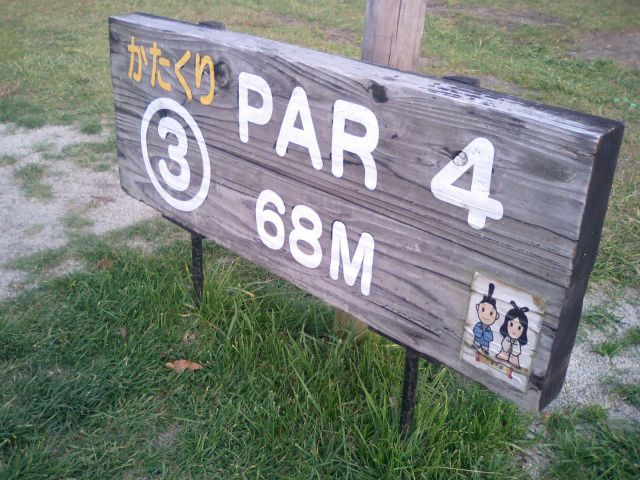
A typical sign showing a hole not to be missed
If you have ever walked off a golf course thinking, “I love this game, but my back could use a shorter walk,” Japan may have already solved the problem.
It is called Park Golf, and honestly, it feels like somebody blended golf, croquet, a public park, and a relaxing afternoon with friends into one surprisingly addictive game.
The sport was invented in 1983 in Makubetsu, Hokkaido, Japan, and over the years it has quietly grown into a huge recreational pastime. There are now more than 1,300 courses in Japan alone, along with hundreds of thousands of players, known as “parkers.”
And before you ask, yes, I immediately wanted to try it. The closest ones I found to Northern Michigan are in New London, Ohio and Sparta, Wisconsin. Anyone up for a road trip? 😊
So What Exactly Is Park Golf?
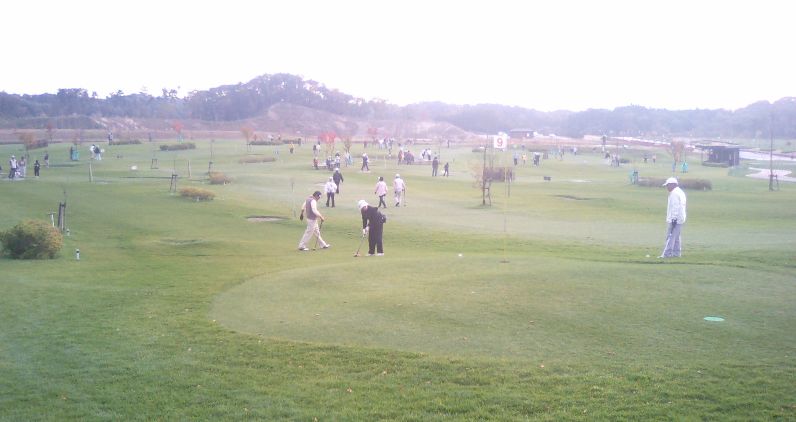
A busy day on a Park Golf course in Miyagi, Japan.
At its core, Park Golf follows the same idea as regular golf. Get the ball into the hole in the fewest strokes possible.
The difference is that Park Golf strips the game down to its simplest form. You only need one club and one ball. The courses are much shorter, the rules are easier to learn, and the entire experience is designed to be welcoming for all ages and skill levels.
Frankly, it sounds like the kind of thing your uncle who refuses to keep score would absolutely dominate.
A standard round is nine holes, with each hole topping out at just 100 meters. A full course is limited to 500 meters total.
That means no five hour rounds, no searching for your ball three fairways over, and no debates about whether your buddy’s breakfast ball “counts.”
Although, let’s be honest, some traditions probably carry over.
The Equipment Is Delightfully Simple
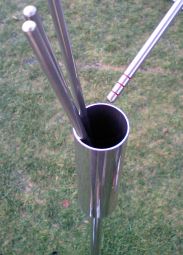
A player draws the rod designating third play (“san-ban”)
Park Golf clubs look a bit like a traditional driver, except shorter and thicker. The club face is flat, and most shots stay low along the ground. Only the really skilled players consistently lift the ball into the air.
The balls are bright colored plastic resin, about 60 millimeters in diameter and under 100 grams in weight. They come in all kinds of colors, partly because they are easier to spot from a distance. Which, if you have ever lost a white golf ball in the middle of the fairway somehow, feels like a smart idea.
And yes, Park Golf players can get just as particular about equipment as traditional golfers.
Some players carry multiple balls for different conditions. There are even premium ball carriers and scorecard holders that parkers proudly use around the course.
Golfers are golfers everywhere, apparently.
There Is Actual Strategy Involved
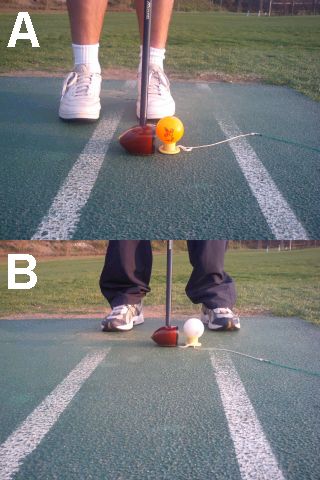
A: Ashi-donari stance, slightly behind the ball, used for getting loft on delicate chip shots. B: Kata-haba stance used for stability during long drives.
Do not mistake “simpler” for “easy.”
Park Golf still includes fairways, rough, bunkers, greens, and out of bounds areas. Players use familiar golf terms like birdie, bogey, eagle, and double eagle.
There is even strategy in the stance players use.
Some stances help keep the ball rolling low along the ground, while others help create loft for delicate chip shots. Stability and precision both matter, especially during tournament play.
And yes, there are tournaments. Serious ones.
Scores as low as 96 over four rounds have been recorded, and one player reportedly shot a 22 during a single round.
Meanwhile, I still celebrate every time I avoid a triple bogey on a par three.
One Of The Best Parts Might Be The Etiquette
This is where Park Golf gets especially interesting.
The game places a huge emphasis on enjoying nature and respecting fellow players. Smoking is forbidden on courses. Players are encouraged to keep pace, watch out for others, and avoid giving unsolicited advice.
Honestly, regular golfers might want to borrow that last rule.
The founders intentionally created the game to be affordable, accessible, and social. The physical demands are lower, making it ideal for kids, families, and older adults. In fact, many of the sport’s most dedicated players are retirees.
That feels very Northern Michigan somehow. A game played outdoors, surrounded by nature, where people of all ages can spend a few relaxed hours together.
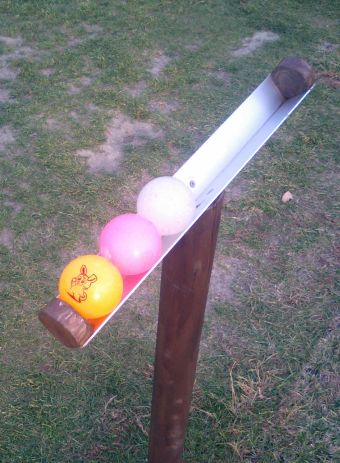
Three brightly colored park golf balls
Even The Equipment Has Its Own Culture
Like traditional golf, Park Golf has developed its own equipment brands and loyal followers.
Japanese companies like Mizuno and Asics produce popular gear, while luxury manufacturer Honma offers handcrafted clubs with premium detailing.
There are even multi layer Park Golf balls engineered for different shot characteristics, including models designed to curve more in the air or stop quickly on the green.
So yes, somewhere out there, somebody is absolutely explaining why their three piece Park Golf ball gives them “better feel around the green.”
Some things are universal.
Park Golf Has Reached North America Too
The sport made its way to the United States thanks to professional wrestler Dick “The Destroyer” Beyer, who fell in love with the game while spending time in Japan. He opened the first American Park Golf course in Akron, New York, in 2013.
In 2025, that same course hosted the first International Park Golf Association tournament in North America.
That tells me this little game may not stay little forever.
Could Park Golf Work In Northern Michigan?
Honestly, I think it could.
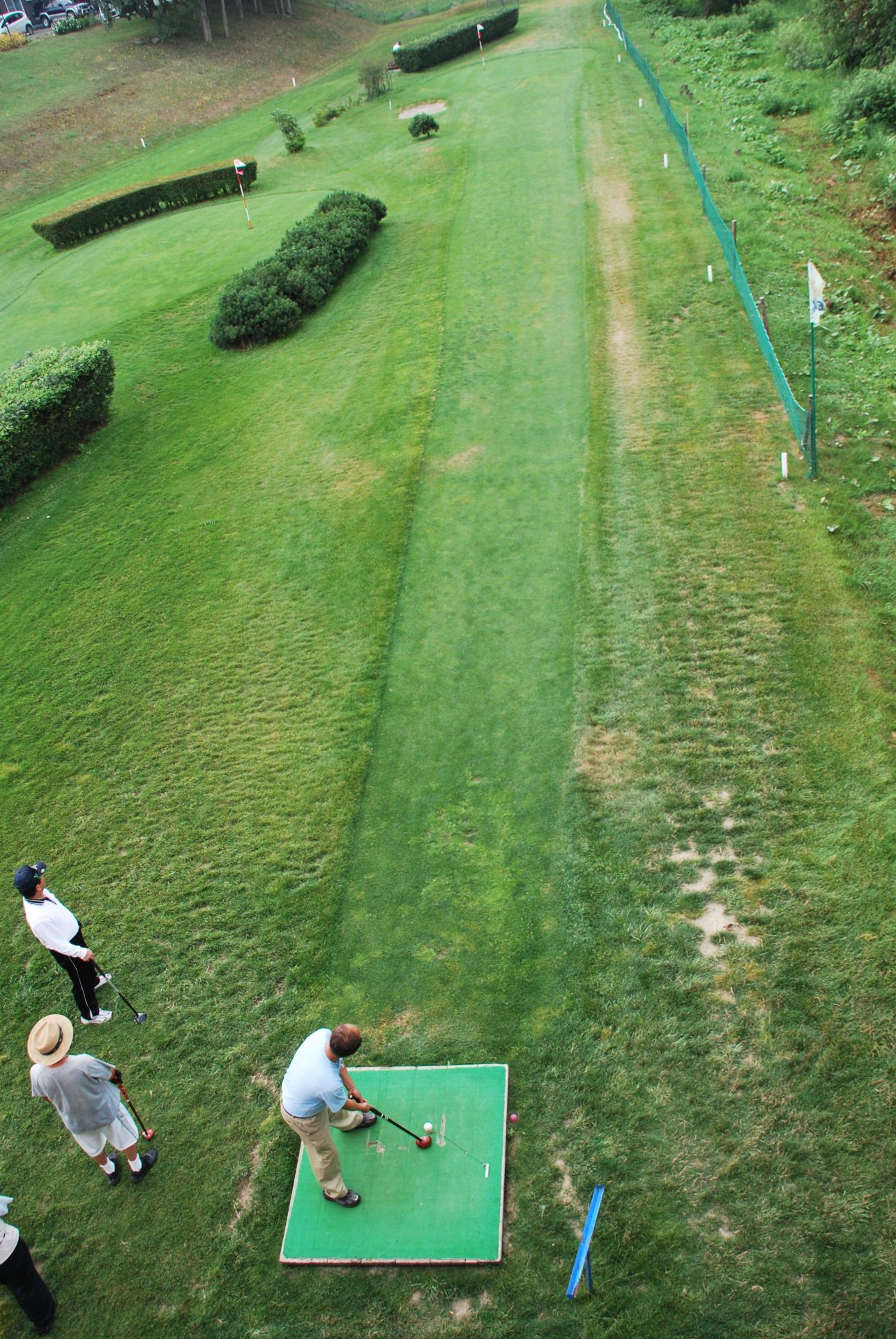
A man about to putt in a game of park golf on the Izarigawa Park Golf Range’s Kawasemi Course in Kogane Kita, Eniwa, Hokkaido. – By Keith Blayney – Own work, CC BY-SA 3.0, https://commons.wikimedia.org/w/index.php?curid=26192034
Northern Michigan already embraces outdoor recreation, relaxed competition, and community based sports. Park Golf seems like it would fit naturally into resort towns, public parks, campgrounds, retirement communities, and family recreation areas.
It is affordable, beginner friendly, and fast paced enough that nobody has to block off an entire day to play.
Plus, if we are being honest, there are plenty of golfers who love the spirit of the game but would not mind walking a little less distance between shots.
No shame in that.
If you want to learn more or find a course near you, visit the International Park Golf Association of America or the North American Park Golf Association.
And if Park Golf ever shows up in Northern Michigan, I have a feeling a lot of us will give it a try. Even if we still insist we could have made that putt with our regular putter.